A third would leave the car at home

Results from the Pilot Cities Project were recently presented to the Environment and Planning Council. Findings indicate that waste sorting has become routine, and a third of respondents would willingly stop driving to work in favor of taking the city bus or another mode of transportation.
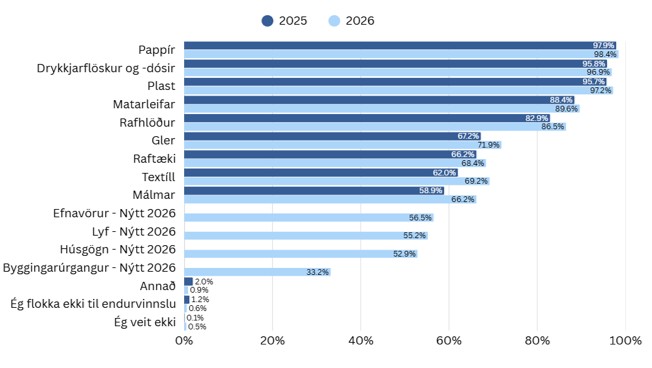
More than 90% of respondents regularly sort paper, plastic and organic waste, while over half also separate materials like medications, furniture and construction waste.
The primary finding reveals that Reykjavík residents' sorting habits depend mainly on access to infrastructure and services, rather than age, gender or other demographic factors. Sorting everyday household waste is now deeply ingrained for most residents, but increasing recycling across other waste categories demands better access, clearer information and more convenient options.
A third of drivers want to switch how they get around
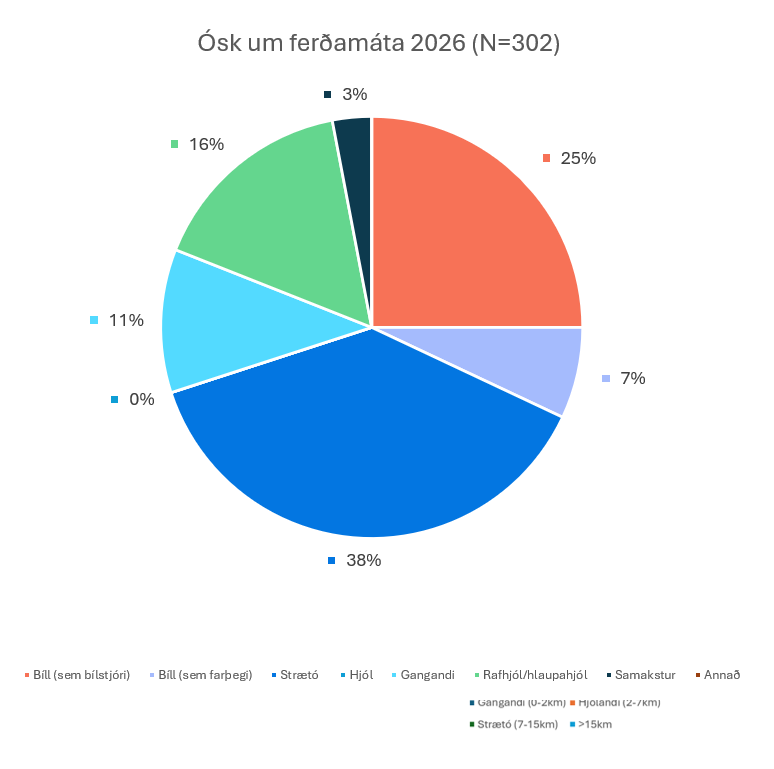
The research further highlights that the private car remains by far the dominant mode of transportation in the capital area. Even so, roughly a third of commuters who drive express a desire to switch to another mode of transportation — specifically public transit, biking or light electric vehicles.
Although 98% of respondents live close enough to work for active transportation, the primary barriers remain cost, reliability and a lack of competitive alternatives to the private car.
Residents express a willingness to change
These results emphasize that improved infrastructure is the essential factor for both waste sorting and green transportation. Residents express a willingness to change but stress that solutions must be simple, accessible and tailored to daily life.
Pilot Cities is a project funded by Climate KIC under the NetZeroCities initiative. Reykjavík secured the grant through the city's participation in a European partnership of 112 cities committed to becoming smart and carbon-neutral by 2030 under the Climate City Contract.